


Mask Ear Cord Elastic Making Machine
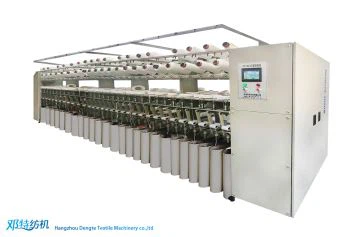
Machine model: Dt2020
Machine name: Mask rope crochet knitting machine
Machine size: 5m * 12m * 1.8m
Material: Polyester + Spandex / Nylon + spandex
Size: 2.8-5mm
Color: white
Pattern: round / flat
This round / flat elastic band is suitable for all kinds of facial mask hanger, mask elastic band, KN95 mask, FFP2 elastic earring, fluffy hat elastic belt, doctor cap elastic belt, medical mask elastic band, tubular elastic earring, gloves elastic band, facial mask elastic rope, mask bungee jumping, surgical mask earring.
Information about textile industry
However, novel coronavirus pneumonia has been almost completely down from the whole industry chain, with the situation of foreign trade in textile and clothing industry being slow, the domestic sales recovering slowly and the new epicenter pneumonia epidemic epicenter gradually coming from Europe and the United States to India and non state "handover bar". Moreover, in recent years, this negative environment continues to ferment and transfer to the upstream, and the whole industry even has the phenomenon of "continuous" default, which has greatly damaged the entire cotton textile and clothing industry chain. In the past month, affected by the cancellation of foreign trade orders (direct and indirect exports), delayed shipment and the phenomenon that the consignee does not take delivery of goods or even discards goods, some foreign trade companies can only negotiate with textile and clothing enterprises to terminate or break the contract (some manufacturers' products have been put on the machine or even completed 50% - 80%) in order to "Self-protection"; and clothing enterprises to pass on the risk of lack of orders and high cost of raw materials, Only selectively cancel the contract with the textile factory and textile enterprise; after the pressure transmission, the cotton enterprise becomes the terminal of continuous default. In fact, under the influence of the international epidemic, the whole domestic textile and garment industry chain can not be "independent", and each link of the industry chain must share the risk of the whole industry.
As for imported yarn, as of April 9, the spot price of FCY index c32s was closed at 19983 yuan / ton, the same as last week. Among them, as of early April, many ports in India were closed and more than 50000 containers were stranded due to the influence of the embargoed country. India's cotton processing and export, cotton gauze production and sales, clothing, foreign trade and other industries have been strongly impacted. In fact, the speed, harmfulness and low prevention and control ability of India's epidemic far exceed the government's prediction. Who and some international medical institutions all point to India and Africa as the next epicenter of the epidemic. Although cotton, cotton textile and clothing enterprises are eager to unlock and lift the ban, they are probably wishful thinking. In this context, cotton and yarn in India have been suspended almost indefinitely. Pakistan entered the blockade last week, partially delaying trade. Although the demand for cotton yarn in the lower reaches decreased sharply, the price of cotton yarn increased due to the decrease of production. The sharp decline in the opening rate of textile mills has created conditions for textile enterprises to raise their prices.
According to the German edition of the European times, from this week, Germany has fully implemented the compulsory order of masks, requiring people to wear masks when entering stores or taking public transport. Although the Federal Ministry of health has successfully purchased 2 billion medical surgical masks, this is far from enough to balance the current huge demand for masks in Germany.
During the new crown epidemic, as a rigid demand material, masks are always in short supply in the global market. The global supply of masks is heavily dependent on Chinese production. In order to reduce dependence on other countries and realize self-sufficiency as soon as possible, Germany decided to strengthen domestic production of masks. More than 500 textile manufacturers in Germany have revamped their production lines to produce surgical masks, FFP standard masks and reusable masks, the world daily reported.
Soon, textile manufacturers found that it was not easy to resume the production of masks in Germany. To comply with a series of strict EU environmental protection regulations, they could not produce masks, protective clothing and other medical protection materials in the EU. The German textile and fashion industry association felt helpless. Ingeborg Neumann, President of the association, said: "at the moment of the epidemic, although many enterprises are struggling on the verge of bankruptcy and bankruptcy, they insist on increasing mask production, while the EU is busy tightening environmental regulations at this time."
According to the relevant environmental protection plan, from 2021, the EU will implement a higher standard of environmental protection policies, including carbon dioxide emission tax, tightening the restrictions on chemicals and materials within the EU, and strengthening waste emission recovery management. Once the new environmental regulations come into force, EU mask manufacturers will be limited by chemical regulations and will not be able to continue to produce and sell medical surgical masks and FFP standard protective masks, according to the textile industry association.
Under the EU's high standard environmental protection policy, Germany's self-sufficiency in producing masks is bound to be an illusion. Environmental protection regulations not only impose strict restrictions on textile colorants, but also set the maximum use proportion of micro plastics. FFP standard masks cannot be approved because the content of micro plastics is higher than the European and American standards. In addition, due to the strict restrictions on fluorine-containing chemicals in the new environmental regulations, the production of protective clothing and gas masks for fire fighting and first-aid work will also be banned within the EU.
The textile association has written to Svenja Schulze, the Federal Minister of environment, noting that EU environmental standards have posed a serious threat to the textile manufacturing industry. Under strict policies and regulations, a large number of manufacturers have no choice but to flee to Asia. Some even mentioned that this would lead to "de industrialization of Germany".
In Asia, due to low production cost, loose environmental regulations, mask production efficiency is amazing. In contrast, the textile industry in Germany is in a crisis of contagion and a large number of companies are at risk of bankruptcy, Neumann said. The textile market is nearly collapsing, with about 1400 textile manufacturers applying to the government for short-term job subsidies.
According to the report, whether or not the new environmental protection laws are implemented as scheduled, the cost performance of products made in Germany is ultimately inferior to that made in China. Similarly, hospitals are more willing to purchase medical protection products made in China than produced in Germany.
Hot Tags: mask ear cord elastic making machine, China, manufacturers, suppliers, factory
You Might Also Like



Send Inquiry