


Face Mask Ear String Elastic Machine
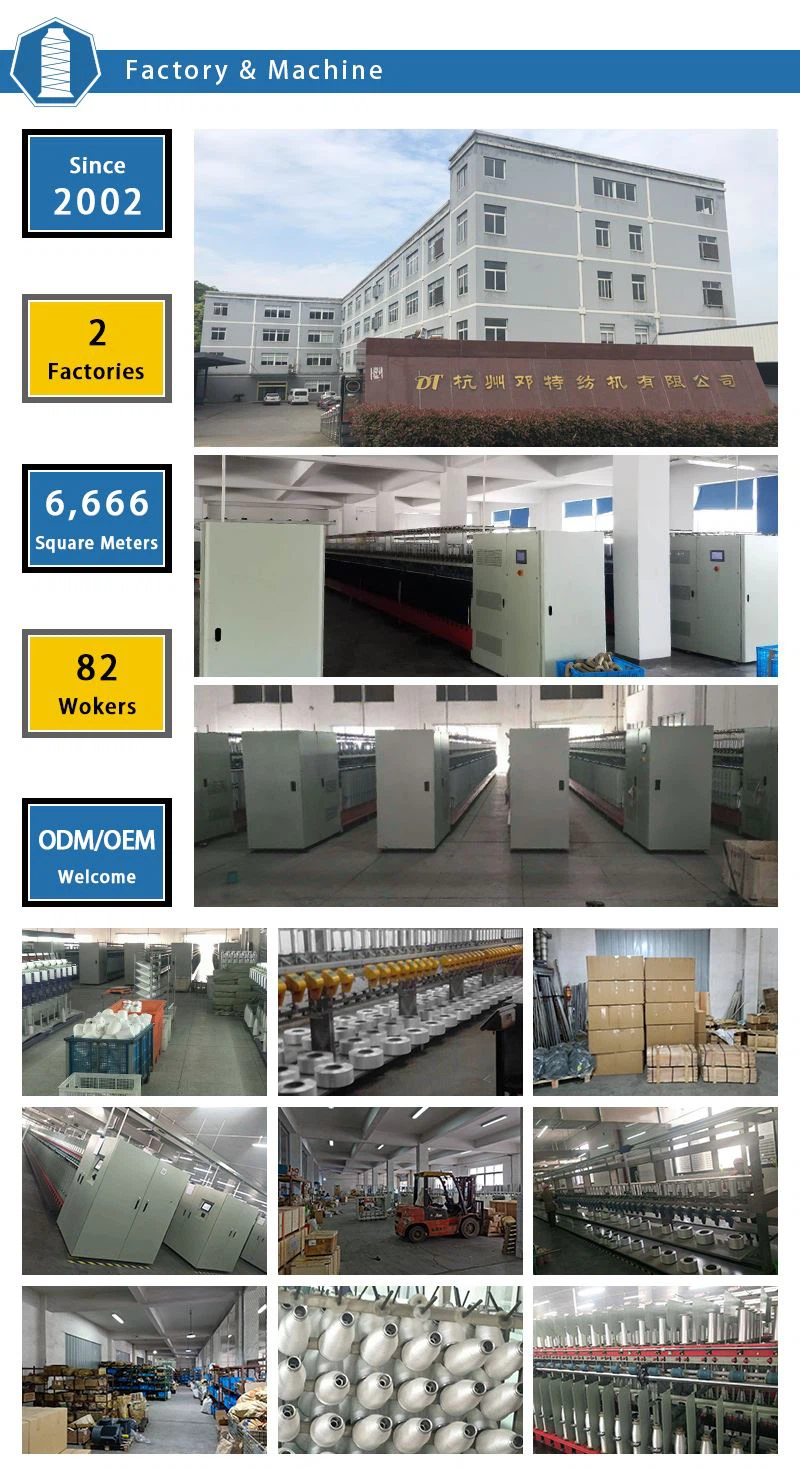
Machine model: Dt2020
Machine name: Mask rope crochet knitting machine
Machine size: 5m * 12m * 1.8m
Material: Polyester + Spandex / Nylon + spandex
Size: 2.8-5mm
Color: white
Pattern: round / flat
This round / flat elastic band is suitable for all kinds of facial mask hanger, mask elastic band, KN95 mask, FFP2 elastic earring, fluffy hat elastic belt, doctor cap elastic belt, medical mask elastic band, tubular elastic earring, gloves elastic band, facial mask elastic rope, mask bungee jumping, surgical mask earring.
Information about textile industry
According to the US agriculture Counsellor's report, Pakistan's cotton production in 2020 / 21 is expected to be 6.3 million bales, a decrease of 21% year-on-year, due to a 12% year-on-year decrease in cotton planting area. Pakistan's textile cotton consumption is expected to be 11 million bales, and the government continues to provide support for textile exports. At the same time, the textile industry continues to adhere to the high-quality development route, with cotton imports expected to reach 4.5 million bales, an increase of 8% year on year.
This year, Pakistan's cotton planting area is expected to be 2.2 million hectares, down 12% year-on-year, as cotton farmers switch to other better yielding crops, such as corn, rice and sugar cane. At the same time, serious pest problems, unpredictable weather and insufficient supply of cotton seeds are also important factors for the reduction of area. In 2019, the emergence rate of new cotton in Pakistan is only 40-60%, far below the normal level of more than 80%. As the quality and quantity of cotton seed are not guaranteed, the government will reduce the emergence rate from 80% to 50%.
This year, Pakistan's cotton production is expected to increase, because only core cotton farmers are left to grow cotton, so productivity will increase. Due to the abundant rain and snow from February to March, this year's irrigation water situation is better than last year's, and the unit yield is expected to increase by 8% year-on-year, reaching 623 kg / ha.
In 2020 / 21, Pakistan's cotton consumption is expected to be 11 million bales, a slight increase compared with the same period last year, due to the Sino US trade problems that caused some textile orders to flow to Pakistan. At the same time, the improvement of energy supply and the extension of EU GSP for two years also bring opportunities to textile production. In addition, Pakistan's demand for high-grade cotton is still stable, with an estimated import volume of 4.55 million bales.
Europe, America and Japan are the main consumers of textiles in the world, and cotton textiles are the main products. The impact of the epidemic on the textile consumption market in Europe, the United States and Japan mainly includes two aspects: one is the direct impact caused by the epidemic prevention and control measures, mainly including the logistics restrictions and the interruption of textile business; the other is the indirect impact caused by the epidemic, including the economic recession, the decline of income level and the increase of unemployment. This will make it difficult for global cotton consumption to recover in a short time.
India, Pakistan, Turkey, Bangladesh, Vietnam and Indonesia are the main textile producers. There are many uncertain factors in the epidemic prevention and control work of these countries, especially in terms of testing capacity and medical level, which is worrying. The actual number of cases may be far greater than the official figures. As the epidemic continues to spread and the global textile consumption demand shrinks, it is difficult for textile manufacturers to operate. India's textile industry could cut 10 million jobs without government support, the garment manufacturers association said. As the epidemic continues, it is expected that more and more textile enterprises will face bankruptcy, and even lead to a large-scale disruption of the global textile industry chain. Its impact on global cotton consumption will be incalculable.
Finally, as a futures analyst, Liu Qiannan said from the perspective of operation: "whether it is the international market or the domestic market, the trend of the whole cotton price will be closely related to the development of the global epidemic. From the perspective of investment, although the prices of American cotton and Zheng cotton affected by the epidemic are relatively low in history, the price is expected to lead to the decrease of global cotton production due to the low intention of farmers to plant cotton, and the investment value of cotton will gradually highlight, but the premise is that the global epidemic is basically under control. At present, the market may face a major crisis once in several decades. It is not recommended to enter the market in a hurry at this time. We need to wait for the further release of the negative and panic mood before considering the investment. "
Brief introduction of dyes used in pure cotton fabric dyeing
The dyes used for pure cotton fabric dyeing mainly include direct dyes, reactive dyes, reducing dyes, soluble reducing dyes, insoluble even ammonia dyes, sulfurized dyes, etc. Printing dyes mainly include reactive dyes, insoluble azo dyes, stable insoluble azo dyes, reducing dyes, soluble reducing dyes and printing coatings. Viscose fibers of the same kind as cotton fibers can also be dyed and printed with the above dyes. However, viscose fiber is a kind of regenerated cellulose fiber, and its structure is relatively loose. Compared with cotton fiber, viscose fiber is not alkali resistant and sensitive to acid. Therefore, when dyeing with this kind of dye, there should be some differences in process. The following is a brief introduction to the dyeing and printing properties of common dyes for pure cotton fabrics.
【1】 Direct dyestuff direct dyestuff can dissolve in water, in neutral or weak alkaline solution, can dye cotton fiber directly. The addition of neutral electrolytes such as salt can increase the amount of impurities on the dye. The direct dye chromatography is complete, the dyeing method is simple, and the price is relatively cheap. However, the dyeing fastness of this dye is not good enough, so it needs to be fixed in the post-treatment.
【2】 Reactive dyestuffs reactive dyestuffs refer to soluble dyestuffs containing active groups. Under suitable conditions, it can combine with cellulose fiber and protein fiber, and improve the color fastness of the dyed substance in washing and soaping. At the same time, it also has the advantages of simple dyeing and printing, bright color, homogeneous chromatogram and cheaper price. However, the fixation rate of general reactive dyes is not high, which is easy to hydrolyze in alkaline solution, resulting in floating color. Therefore, the method of dyeing first and fixing later is used to improve the fixation rate of dyes. For printing, one-phase or two-phase printing method should be selected according to different dye varieties. Some reactive dyes have poor color fastness to chlorine bleaching and climate.
【3】 Vat dyes vat dyes are insoluble in water and cannot be dyed directly. It needs to be reduced to Cryptochrome in the alkaline strong reducing solution of caustic soda and sodium silicate powder. Cotton fibers are dyed from cryptochrome, oxidized, recovered to insoluble dyes and fixed to fibers. The color spectrum of vat dyes is complete and bright, while the color fastness of sun and soap washing is better. However, due to the high price, some yellow and orange varieties have the effect of photosensitive embrittlement, so they are limited in application. When dyeing or printing, it is necessary to strengthen the treatment after soaping to remove the floating color and improve the brightness.
【4】 Soluble vat dyestuff is a derivative of vat dyestuff, soluble in water. After dyeing on the fiber, it needs to be oxidized in the acid solution to make the dye hydrolyze, oxidize and return to insoluble vat dyestuff and dye on the fiber. The dyeing process of soluble vat dyes is simple, the dyeing is uniform, and the dyeing fastness is high. But the price of this dye is very high. It is mainly used for dyeing and printing of light and medium colored cotton fabrics.
【5】 Sulfurized dyestuffs sulfurized dyestuffs are insoluble in water, but can be dissolved in sulfurized sodium solution, reduced to cryptochrome, which is absorbed by cotton fiber, oxidized to insoluble dyestuffs and fixed on cotton fiber. Sulfurized dyes are mainly used in the dyeing of dark cotton fiber products. They are easy to dye and cheap, but they are not strong enough in rubbing color and bright enough in color. Some dyes (such as black sulfide) will make the fiber brittle during the storage of the fabric, so anti brittle treatment is needed after dyeing. Yellow and orange sulfide dyes often have photosensitive embrittlement effect on fibers.
【6】 The insoluble azo dye is composed of two kinds of dyes (chromophenol) and chromogenic agent (chromophore). When dyeing, the fabric is first treated with caustic soda solution of chromophenol, and then colored with diazotization solution of chromobase. The chromophenol on the fabric and diazo compound of chromobase are coupled to form insoluble azo dye, which is fixed on the fabric. Because of the need of ice in diazotization reaction of color group, insoluble even ammonia dye is also called ice dye. This kind of dye has bright color, good color fastness to soaping and sunlight, but poor color fastness to rubbing and worse color fastness to wet rubbing.
【7】 Stable insoluble azo dye is a mixture of chromophenol sodium salt and temporarily stable diazo compound. In general, there is no coupling reaction between them. After a certain treatment after printing, the temporarily stable diazo compound is converted into active diazo compound, and then coupled with chromophenol to form azo dye with low depth. This kind of dye is mainly used for printing small patterns.
Hot Tags: face mask ear string elastic machine, China, manufacturers, suppliers, factory
You Might Also Like



Send Inquiry