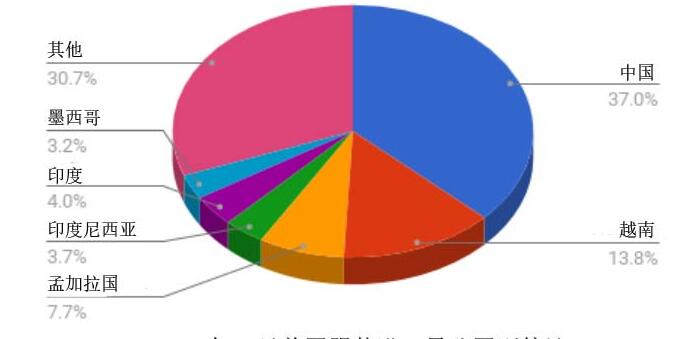
According to the US Department of Commerce statistics, in November 2019, US apparel imports continued to decline significantly, but the decline was less than October. That month, the United States served China
Equipment imports have fallen rapidly, while other countries have benefited. In November 2019, U.S. apparel imports fell 9.4% year-on-year, compared with a 16% decline in October.
China's apparel imports fell by 20.4%, and fell by 30.3% in October. By contrast, U.S. imports to the Gala have increased by 8.7%
According to US Department of Commerce statistics, in November 2019, US apparel imports continued to decline significantly, but the decline was less than October. That month, U.S. clothing imports from China quickly dropped
Drop, and some other countries benefited.
In November 2019, the U.S. clothing import volume decreased by 9.4% year-on-year, while it fell by 16% in October. The import volume of Chinese clothing in November decreased by 20.4%.
Down 30.3%. In contrast, US imports from Bangladesh increased by 8.7%, Cambodia by 14.8%, Jordan by 16%, and Pakistan by 12%.
From January to November 2019, the U.S. clothing import value to China decreased by 7.6%, and the import value to Vietnam and Bangladesh increased by more than 10% year-on-year. Vietnam and Bangladesh
Unit prices in Latin America rose by 4.3% and 5.3%, respectively, while China's fell by 4%.
In fact, American buyers are reluctant to shift orders to countries other than China and have been working to reduce transportation costs. After tariffs on Chinese products in September, the United States
Retailers and brands are forced to look for supplies from other sources. Although China and the United States will sign the first-phase agreement next week, the U.S. tariffs on Chinese products may increase from 1 in February.
5% fell to 7.5%, but this will not play a fundamental role. As long as tariffs on Chinese products continue to be imposed, U.S. apparel purchases in 2020 will need to continue to adapt to this change
Into.