

Soy protein fiber belongs to the category of regenerated plant protein fiber. It uses the pressed soybean oil and soybean meal as raw materials, and uses biological engineering technology to extract the globulin in soybean meal. By adding functional additives, it can be combined with polymers such as nitrile and hydroxyl Graft, copolymerize and blend to make a certain concentration of protein spinning solution, change the spatial structure of the protein, and wet spinning.
It has the soft cashmere-like feel, silky soft luster, cotton's warmth and good skin-friendly, and other excellent properties, as well as obvious bacteriostatic function, known as "healthy and comfortable fiber in the new century".
Soy protein fiber overview ~
1, the structure of the fiber
Physical structure
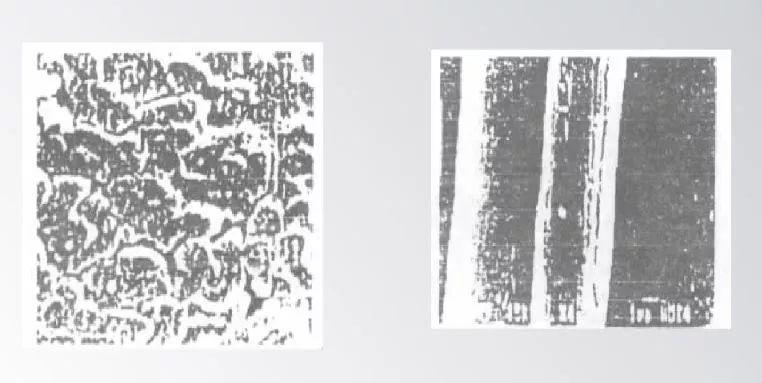
The cross-section is dumbbell or waist-circular, the skin-core structure is obvious, and the skin layer is quite thick and has certain resistance to change. The longitudinal cross-sectional shape is irregular grooves and sea-island-shaped asperities, and there are fine voids that are conducive to the fiber's air permeability, moisture transmission, and heat transfer.
Chemical structure
Soy protein fiber is composed of two components: polyvinyl alcohol and soy protein.
Polyvinyl alcohol is a carbon chain polymer, and the macromolecules are connected by carbon-carbon chains. The molecular chain contains a large number of hydroxyl groups. On average, there are 1400-1800 macromolecules. Decreased flexibility, it is a macromolecule with strong rigidity.
Soy protein is a natural heterochain polymer. Macromolecules are connected to each other by amide bonds, and the length of the segment is small, which is a flexible chain. Because soy protein macromolecules have larger branch chains, the conformation of the macromolecules is a-helical. The protein is easily denatured under many conditions such as tension, humidity and heat. The denatured soybean protein molecular chain is stretched to be linear.
Fiber properties ~
The fineness and strength of soybean protein fibers are comparable to natural silk, and they have a moderate oil content, friction characteristics, and excellent antistatic properties, so that soybean protein fibers have spinnability, and the fabric woven with soybean protein is smooth and smooth. soft.
Soy protein fiber is thin, close to silk, and strong, but the uneven breaking strength makes spinning difficult, the elongation at break is normal, the recovery rate is not good without wool, and the specific gravity is small.
Soy protein fiber has poor acid resistance and alkali resistance, while soybean protein fiber has better sunlight resistance.
Soy protein fiber has a silky luster, wetness and irregular cross-sections caused by fine longitudinal stripes, fine cracks and internal hole gaps. It is more suitable for processing knitting yarns and is used for the development of underwear spinning products.
From the perspective of comprehensive performance, soy protein fiber fabrics are soft in color and have the natural luster and drape of silk fabrics. They have a strong appearance and feel of cashmere fabrics and strong warmth. They are breathable, moisture-conducting, refreshing, and hemp fabrics. The characteristics of moisture absorption and quick drying are very suitable for high temperature and high humidity areas.
Problems of soybean protein fiber fabric processing ~
The composition ratio of soybean protein in soybean protein fiber is too low to achieve the expected performance, but increasing its ratio will affect its mechanical properties;
Mechanical properties need to be improved;
The fluffing and pilling of the fabric still needs to be improved, which is an important factor limiting the further marketization of soybean protein fiber;
Elimination of primordial primary colors and light stability need to be improved;
Poor thermal stability.
Soy protein fiber fabric ~
At present, the main domestic products for soy protein fiber fabrics are as follows:
Tussah silk / soy protein fiber variety series: its blended fabric has bright color, glitter, two-color, same-color effects, smooth feel, light and elegant, and can be used as high-end silk clothing fabrics.
Cashmere, wool / soy protein fiber variety series: tweed, serge, pansi, etc., can be dyed, striped, batch dyeing, the product has excellent elasticity, long-lasting gloss, firm color and other characteristics, can be used as high-end suits, women's suit And shirt fabric.
Soy protein fiber / chemical fiber series: Soy protein fiber and chemical fiber blended interwoven products are made into fabrics with wool-like and silk-like feel, such as wool-like tweeds and bansi, etc .; middle-to-high-grade wool-like products can be developed. It has a firm feel, good gloss, good moisture absorption, and is comfortable to wear.
Pure soybean fiber fabrics and elastic fabrics: Fabrics made of pure soybean protein fibers have cotton and wool styles; soy stretch fabrics can be made of soy fiber-coated spandex or other fiber-coated spandex and soybean fibers to interweave into weft Elastic or bi-elastic fabric, the finished product has the characteristics of bright color, soft touch and good gloss.


